

Can HTN LCD display display video?
Leave a message

Hey there! As a supplier of HTN LCD displays, I often get asked this question: "Can HTN LCD display display video?" Well, let's dive right into it and find out.
First off, let's quickly go over what an HTN LCD display is. HTN stands for High-Twist Nematic. It's a type of liquid crystal display technology that offers better viewing angles and contrast compared to the standard TN (Twisted Nematic) displays. HTN LCDs are commonly used in various applications like industrial control panels, medical devices, and consumer electronics because of their reliability and cost - effectiveness.
Now, the big question: Can it display video? The short answer is, it depends.
Technical Limitations
HTN LCD displays have some inherent technical limitations when it comes to video playback. One of the main issues is the response time. Response time is the time it takes for a pixel to change from one state to another, say from black to white or vice versa. In video, there are rapid changes in colors and images, and a slow response time can lead to motion blur.
HTN LCDs typically have a relatively slow response time compared to some other display technologies like TFT (Thin - Film Transistor) LCDs. For example, a typical HTN LCD might have a response time in the range of tens to hundreds of milliseconds. In contrast, TFT LCDs used in modern smartphones and TVs can have response times in the single - digit milliseconds. This slow response time means that when you try to play fast - moving video content on an HTN LCD, the image will look blurry, and you'll miss out on a lot of the details.

Another limitation is the refresh rate. The refresh rate is the number of times per second that the display updates the image. A higher refresh rate results in a smoother video experience. Most HTN LCDs have a relatively low refresh rate, usually around 30 - 60 Hz. For comparison, high - end gaming monitors can have refresh rates of 144 Hz or even higher. With a low refresh rate, fast - paced video content will appear choppy, and it won't be as engaging to watch.
Suitable Video Content
However, it's not all bad news. HTN LCD displays can handle certain types of video content quite well. If the video is slow - moving, has simple graphics, and doesn't require high - speed transitions, then an HTN LCD can do the job. For instance, in some industrial applications, the video might be showing a slow - moving conveyor belt or a static process. In these cases, the limitations of the HTN LCD won't be as noticeable.
Also, if you're using the HTN LCD for educational or informational purposes where the video is mainly text - based or has simple animations, it can work just fine. For example, a museum display that shows a short video about the history of a particular artifact with some text overlays can be effectively presented on an HTN LCD.
Our Positive Transmissive HTN LCD Display
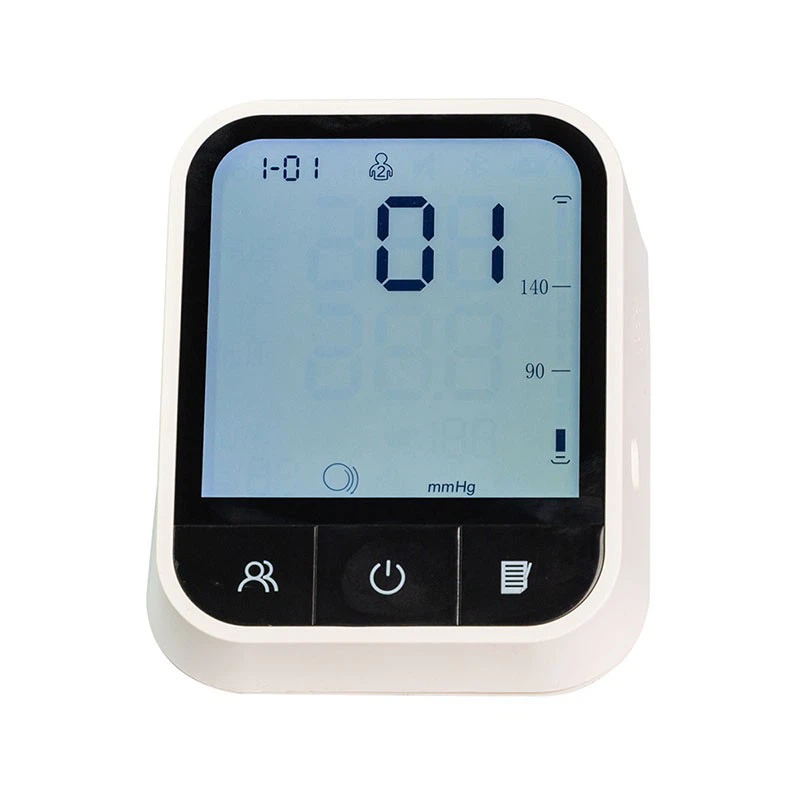
At our company, we offer a Positive Transmissive HTN LCD Display. This type of display has some unique features that can enhance its performance even when dealing with video - like content.
The positive transmissive design means that the display is backlit, which improves the visibility of the content. It also has a good contrast ratio, which helps in making the images and text stand out. While it still has the typical limitations of an HTN LCD in terms of response time and refresh rate, for the right kind of video content, it can be a great option.
Cost - Benefit Analysis
One of the major advantages of using an HTN LCD for video (or any application, for that matter) is the cost. HTN LCDs are much more affordable compared to TFT LCDs. If your application doesn't require the high - end performance of a TFT LCD and you're on a budget, then an HTN LCD can be a cost - effective solution.
For example, if you're a small business looking to set up a simple video display in your store to show promotional content, an HTN LCD can give you a decent result without breaking the bank. You can save a significant amount of money that can be used for other aspects of your business.
Making the Decision
So, when deciding if an HTN LCD is suitable for your video display needs, you need to consider a few factors. First, think about the type of video content you'll be showing. If it's fast - paced, high - definition content, then an HTN LCD might not be the best choice. But if it's slow - moving, simple, or text - based content, then it could work well.
Second, consider your budget. If cost is a major concern and you're willing to compromise on some performance aspects, then an HTN LCD is a viable option.
Finally, think about the viewing environment. If the display will be in a low - light environment or if the viewers will be at a distance, the limitations of the HTN LCD might be less noticeable.
Contact Us for Your HTN LCD Needs
If you're still not sure whether an HTN LCD is right for your video display project or if you have any other questions, don't hesitate to reach out to us. We're here to help you make the best decision based on your specific requirements. Whether you need a small - sized display for a handheld device or a larger one for an industrial control panel, we have a wide range of HTN LCD options to choose from.
We can also provide you with samples so that you can test the display with your actual video content and see for yourself how it performs. So, get in touch with us today and let's start a conversation about your HTN LCD display needs.
References
- "Liquid Crystal Displays: Addressing Schemes and Electro - optical Effects" by Ernst Lueder
- "Fundamentals of Flat Panel Displays" by F. S. Chen


