

How does the quality of an LCD backlight affect the overall display quality?
Leave a message

As a supplier of LCD backlights, I've witnessed firsthand the pivotal role that backlight quality plays in shaping the overall display quality. In this blog post, I'll delve into the various aspects of how the quality of an LCD backlight can significantly impact the final visual experience, exploring key factors such as brightness, color accuracy, contrast ratio, and uniformity.
Brightness
Brightness is one of the most noticeable factors influenced by the LCD backlight. A high - quality backlight can produce sufficient luminance to ensure that the display is visible in different lighting conditions. For instance, in well - lit environments like an office with large windows or a brightly lit retail store, a display with a powerful backlight will stand out.
A low - quality backlight may struggle to reach the necessary brightness levels. This can lead to a washed - out appearance, where the colors seem dull and the text or images are difficult to distinguish. When the backlight fails to provide enough luminance, the content on the screen can become virtually unreadable, which is a major drawback, especially for applications such as outdoor digital signage or monitors used in well - lit industrial settings.
On the other hand, a high - end backlight can be precisely controlled to adjust the brightness according to the ambient light. Many modern displays are equipped with sensors that can detect the surrounding light levels and then adjust the backlight brightness accordingly. This not only improves the visibility but also enhances the user experience by reducing eye strain. For example, in a dimly lit room, the backlight can be dimmed to a comfortable level, preventing the screen from being too glaring.
Color Accuracy
Color accuracy is another critical aspect of display quality that is directly affected by the LCD backlight. A good backlight should be able to reproduce a wide range of colors accurately. The backlight provides the base illumination for the liquid crystals in the LCD panel, and if it emits an uneven or inaccurate spectrum of light, the colors on the screen will be distorted.
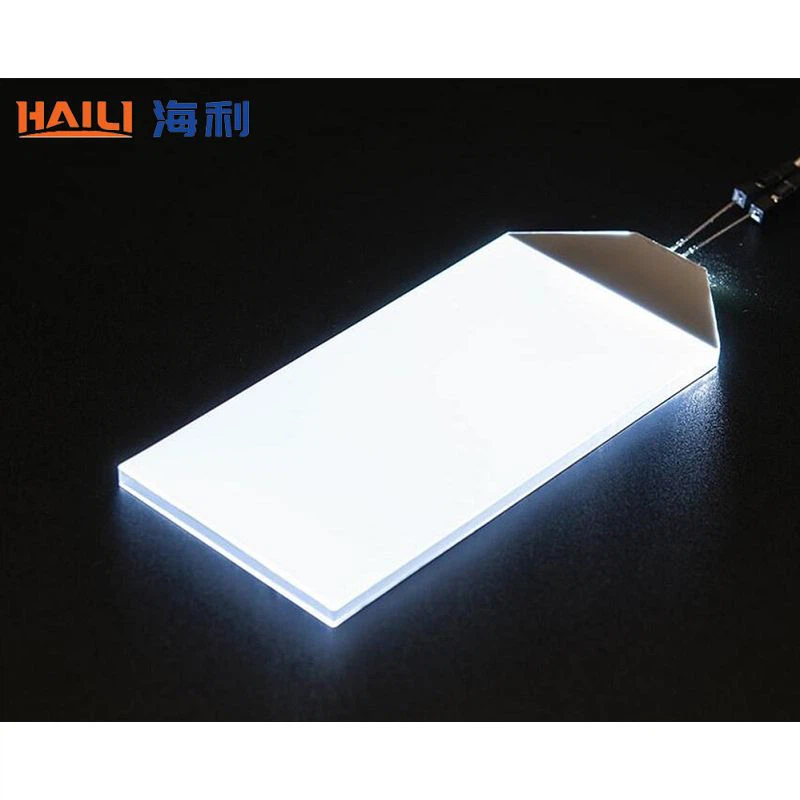
High - quality LCD backlights, such as the LED Backlight with Fluorescent Colors, are designed to have a high color rendering index (CRI). A high CRI means that the backlight can render colors more faithfully to their natural appearance. This is particularly important in applications where color accuracy is crucial, such as graphic design, photography, and video editing.
In contrast, a low - quality backlight may have a limited color gamut. This means that certain colors, especially vibrant and saturated ones, cannot be reproduced accurately. For example, reds may appear more orange, and blues may look dull. This can lead to a significant loss of detail and realism in the displayed content, making it unsuitable for professional applications. Even for general - purpose use, such as watching movies or browsing the web, inaccurate colors can make the viewing experience less enjoyable.

Contrast Ratio
The contrast ratio of a display is defined as the ratio between the brightest white and the darkest black that the display can produce. The backlight plays a vital role in determining the contrast ratio. A high - quality backlight can provide a strong and consistent illumination for the bright areas of the screen while allowing the liquid crystals to block the light effectively in the dark areas.
A powerful and well - designed backlight can enhance the contrast ratio by providing a high level of brightness in the highlights. At the same time, it should be able to work in harmony with the LCD panel to achieve deep blacks. Local dimming is a technology that is often used in high - end backlights to improve the contrast ratio. With local dimming, the backlight can be divided into multiple zones, and each zone can be dimmed independently. This allows for a more precise control of the light output, resulting in a much higher contrast ratio.
Conversely, a low - quality backlight may not be able to provide enough brightness in the highlights or may not be able to achieve deep blacks. This can lead to a washed - out or grayish appearance in the dark areas of the screen, reducing the overall contrast. In movies or games with high - contrast scenes, such as a dark forest with bright moonlight, a low - contrast display will fail to capture the drama and detail of the scene.
Uniformity
Uniformity refers to how evenly the backlight illuminates the entire display area. A high - quality LCD backlight should provide consistent brightness across the entire screen. When the backlight is uniform, there are no noticeable bright or dark spots, and the image appears smooth and consistent.
Poor backlight uniformity can be a major issue in displays. It can be caused by factors such as uneven distribution of light sources, poor light diffusion, or manufacturing defects. When there are bright or dark patches on the screen, it can be very distracting, especially when viewing large areas of solid color or when using the display for tasks that require high visual precision, such as CAD design or video editing.
To ensure good uniformity, high - quality backlights are often designed with advanced light - guiding and diffusing technologies. These technologies help to spread the light evenly across the screen. Additionally, strict quality control measures are implemented during the manufacturing process to detect and correct any uniformity issues.
Impact on Different Applications
The quality of the LCD backlight has different impacts on various applications. For consumer electronics such as smartphones, tablets, and laptops, a high - quality backlight can enhance the user experience by providing a more vivid, accurate, and comfortable viewing experience. Users are more likely to be satisfied with a device that has a display with good brightness, color accuracy, and contrast ratio.
In the industrial and commercial sectors, the requirements for LCD backlights are even more stringent. For example, in medical imaging, where accurate color and high contrast are essential for diagnosing diseases, a high - quality backlight is a must. Similarly, in automotive displays, where the display needs to be visible in different lighting conditions and provide accurate information, a reliable and high - performance backlight is crucial.
As an LCD Backlight supplier, we understand the diverse needs of different industries and applications. We are committed to providing high - quality backlights that meet the strictest standards. Our backlights are designed with the latest technologies to ensure optimal performance in terms of brightness, color accuracy, contrast ratio, and uniformity.
Conclusion
In conclusion, the quality of an LCD backlight has a profound impact on the overall display quality. From brightness and color accuracy to contrast ratio and uniformity, every aspect of the backlight affects how the final image appears on the screen. Whether it's for consumer electronics, professional applications, or industrial use, a high - quality backlight is essential for a superior visual experience.
If you're in the market for high - quality LCD backlights, we'd love to have a discussion with you. Our team of experts can provide you with detailed information about our products and help you choose the right backlight for your specific needs. Reach out to us to start the procurement process and experience the difference that our high - quality LCD backlights can make.
References
- "Fundamentals of Liquid Crystal Displays" by Shin - Tson Wu and David K. Yang
- "Display Technology Handbook" edited by Paul Scheiner and Malcom Tompsett


