

What is the display cable data transfer compatibility of a 2.8 Inch TFT LCD Display?
Leave a message

Hey there! As a supplier of 2.8 Inch TFT LCD Displays, I often get asked about the display cable data transfer compatibility of these nifty little screens. So, I thought I'd take a deep dive into this topic and share everything you need to know.
First off, let's talk about what a 2.8 Inch TFT LCD Display is. TFT stands for Thin-Film Transistor, which is a type of technology used in LCDs to control individual pixels. These displays are popular in a variety of applications, from handheld devices like game consoles and MP3 players to industrial control panels and medical equipment. They offer a good balance between size, resolution, and cost, making them a versatile choice for many projects.
Now, when it comes to data transfer compatibility, there are a few key factors to consider. The most important one is the interface type. Different displays support different interfaces, and you need to make sure that the display cable you use is compatible with the interface of your 2.8 Inch TFT LCD Display.
One of the most common interfaces for these displays is the SPI (Serial Peripheral Interface). SPI is a synchronous serial communication interface that uses four wires: a clock line, a master output slave input (MOSI) line, a master input slave output (MISO) line, and a chip select (CS) line. It's a relatively simple and widely used interface that's easy to implement on microcontrollers and other embedded systems.
If your 2.8 Inch TFT LCD Display uses an SPI interface, you'll need to use an SPI-compatible display cable. These cables typically have four or five wires, depending on whether the display also supports a reset line. Make sure that the cable has the correct pinout and that the wires are properly connected to your microcontroller or other device.
Another common interface is the I2C (Inter-Integrated Circuit) interface. I2C is a multi-master, multi-slave serial communication interface that uses two wires: a serial data line (SDA) and a serial clock line (SCL). It's a slower interface than SPI, but it's also more flexible and easier to use in systems with multiple devices.
If your display uses an I2C interface, you'll need an I2C-compatible display cable. These cables usually have two or three wires, depending on whether the display also supports a reset line. Again, make sure that the cable has the correct pinout and that the wires are properly connected.
Some 2.8 Inch TFT LCD Displays also support parallel interfaces, such as the 8080 or 6800 interfaces. These interfaces use multiple data lines to transfer data in parallel, which can result in faster data transfer rates. However, they also require more pins and are generally more complex to implement.
If your display uses a parallel interface, you'll need a parallel-compatible display cable. These cables can have a large number of wires, depending on the specific interface and the number of data lines supported by the display. Make sure that you carefully match the cable to the interface of your display and that all the wires are properly connected.
In addition to the interface type, you also need to consider the cable length and quality. Longer cables can introduce signal attenuation and interference, which can affect the data transfer performance. It's generally a good idea to use the shortest cable possible to minimize these issues.
The quality of the cable also matters. Look for cables that are well-shielded and have good insulation to reduce the risk of signal interference. You can also consider using cables with ferrite beads or other filtering components to further improve the signal quality.
Now, let's talk about some of the specific applications where you might use a 2.8 Inch TFT LCD Display and the data transfer compatibility requirements for those applications.
In a handheld device like a game console or MP3 player, you'll typically want a display that can handle high-speed data transfer to ensure smooth and responsive graphics. An SPI or parallel interface might be a good choice for these applications, as they offer faster data transfer rates compared to I2C.
For industrial control panels, reliability and stability are often the top priorities. You might choose an interface that's well-established and widely supported, such as SPI or I2C. These interfaces are also relatively easy to troubleshoot and maintain, which is important in an industrial environment.
In medical equipment, safety and accuracy are crucial. You'll need a display that can handle high-resolution images and transfer data accurately and reliably. A parallel interface might be a good option for these applications, as it can provide faster data transfer rates and support for higher resolutions.
If you're interested in our 2.8 Inch TFT LCD Displays or need more information about data transfer compatibility, feel free to reach out. We also offer other sizes like the 3.2 Inch TFT LCD Display, 2.4 Inch TFT LCD Display, and 3.5 Inch TFT LCD Display. We're here to help you find the right display solution for your project.

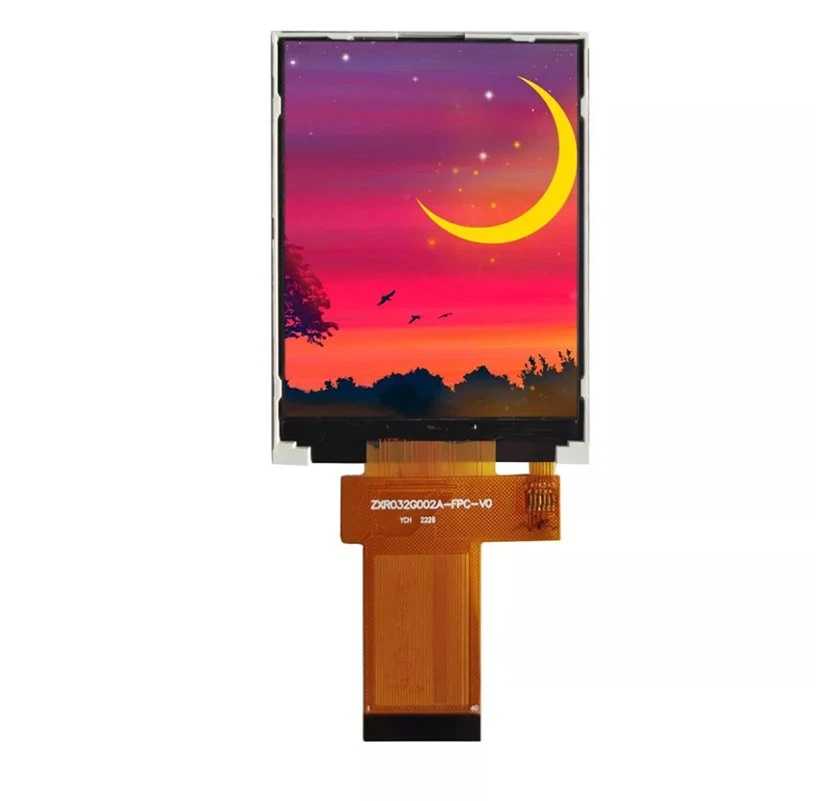
In conclusion, understanding the display cable data transfer compatibility of a 2.8 Inch TFT LCD Display is essential for ensuring optimal performance. By considering the interface type, cable length, and quality, you can choose the right display cable for your application and avoid potential issues. If you have any questions or need further assistance, don't hesitate to contact us. We're always happy to help!
References:
- "TFT LCD Display Handbook" - A comprehensive guide on TFT LCD technology and interfaces.
- "Serial Communication Protocols for Embedded Systems" - A resource that explains different serial communication interfaces like SPI and I2C.


