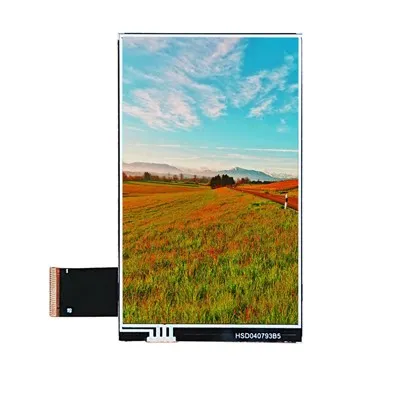
Specification of customized segment code LCD display screen
Leave a message
The specifications of customized segment code LCD displays mainly include the following aspects:
Size and window specifications: The size of the LCD screen (i.e. the length of the longest and widest sides of the glass) and window specifications (the range and width of the LCD display screen, usually indicated in VA on the drawing) need to be provided
Display content: Use CAD software to draw specific styles and sizes, and design display renderings. The display content needs to be segmented, that is, the content displayed together should be divided into one paragraph
Display color: The display color of segment code LCD screen is mainly divided into positive display (such as gray background black text or yellow background black text) and negative display (such as blue background white text or white background black text), etc
Polarizing film types: Polarizing films can be divided into fully transparent (such as fully transparent glass, requiring backlight), semi transparent (such as frosted glass, with or without backlight), and reflective (no backlight required)
Material type: The material for segmented LCD screens can be TN, HTN, STN, FSTN, VA, etc. STN and FSTN have wider viewing angles and relatively higher prices, and are usually used for better display effects on black background white text or color segmented code screens
Working voltage: The working voltage of segmented LCD screens is generally 3.3V or 5V
Usage temperature: The usage temperature range includes normal temperature (0 ℃~50 ℃), wide temperature (-20 ℃~70 ℃), and ultra wide temperature (-30 ℃~80 ℃), depending on the usage environment
Display angle: Common display angles include 6 points and 12 points, which are suitable for different viewing angle requirements
Interface method: The interface method can be metal pins, conductive adhesive strips, or FPC, etc
Driving method: The driver can be integrated on the motherboard or provided by the manufacturer with a segmented LCD module with a PCB board to simplify the installation process and save labor costs. The commonly used driver chips are HT1621 (up to 128 segments) and HT1622 (up to 256 segments)