

How to choose an STN LCD display?
Leave a message

When it comes to selecting an STN LCD (Super Twisted Nematic Liquid Crystal Display) for your project, there are numerous factors to take into account. As a supplier of STN LCD displays, I understand the complexity of this decision and aim to provide you with comprehensive guidance to make the best choice.
Understanding STN LCD Basics
Before delving into the selection process, it's essential to grasp the fundamental characteristics of STN LCDs. STN LCDs are a type of passive matrix display known for their relatively high contrast ratio and wide viewing angles compared to their TN (Twisted Nematic) counterparts. They are commonly used in various applications, including industrial control panels, medical devices, consumer electronics, and automotive displays.
One of the key features of STN LCDs is their ability to display multiple levels of gray or colors, which makes them suitable for applications that require more detailed visual information. Additionally, STN LCDs offer good readability under different lighting conditions, making them versatile for both indoor and outdoor use.
Considerations for Choosing an STN LCD Display
1. Display Size and Resolution
The first consideration when choosing an STN LCD display is the size and resolution that best suit your application. The display size is typically measured diagonally in inches, and it should be selected based on the available space in your device and the amount of information you need to display.
Higher resolution displays can show more detailed images and text, but they also come at a higher cost. Therefore, it's important to strike a balance between the required level of detail and your budget. For applications that require only basic text and simple graphics, a lower resolution display may be sufficient.
2. Contrast Ratio and Viewing Angle
The contrast ratio is a crucial factor that determines the clarity and readability of the display. It is defined as the ratio between the brightness of the white pixels and the brightness of the black pixels. A higher contrast ratio results in more vivid and sharp images, making it easier to read text and distinguish between different elements on the screen.
In addition to the contrast ratio, the viewing angle is also an important consideration. STN LCDs typically offer wider viewing angles compared to TN LCDs, but the actual viewing angle can vary depending on the specific model. For applications where the display will be viewed from different angles, such as in a public setting or a multi - user environment, a display with a wide viewing angle is essential.
3. Operating Temperature Range
The operating temperature range of an STN LCD display is another critical factor, especially for applications that will be used in extreme environments. Different STN LCDs have different temperature ranges, and it's important to choose a display that can operate reliably within the temperature conditions of your application.
For example, if your device will be used in a cold environment, such as in a freezer or an outdoor winter setting, you need to select an STN LCD with a low - temperature operating range. Conversely, if the device will be exposed to high temperatures, such as in an industrial oven or a sunny outdoor location, a high - temperature - resistant display is required.
4. Backlighting Options
Backlighting is used to illuminate the STN LCD display, making it visible in low - light conditions. There are several types of backlighting options available, including LED (Light - Emitting Diode) and CCFL (Cold Cathode Fluorescent Lamp).
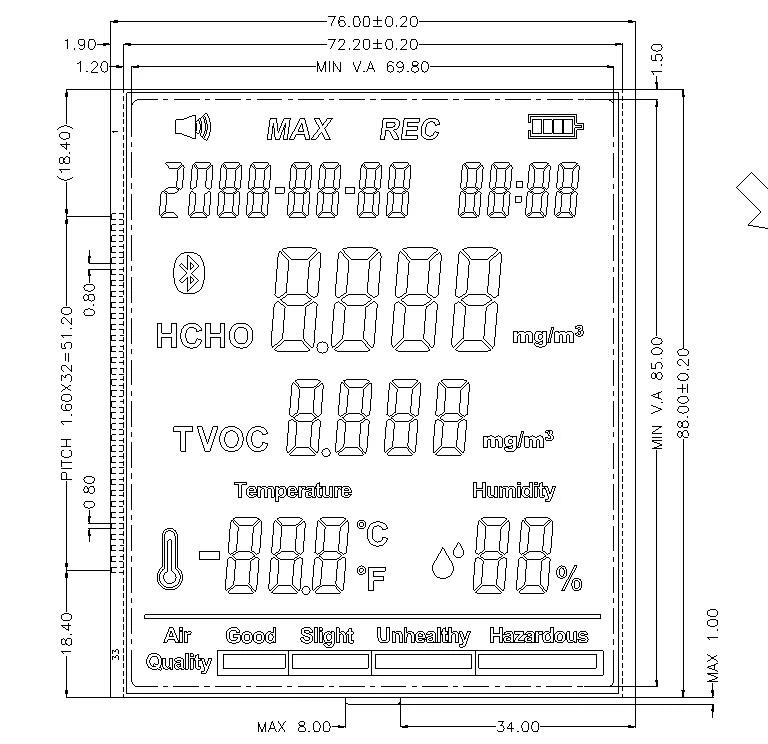

LED backlighting is the most common choice due to its energy efficiency, long lifespan, and low heat generation. It also offers better control over the brightness and color temperature of the display. CCFL backlighting, on the other hand, was more commonly used in the past and is still preferred in some applications where a uniform and high - intensity backlight is required.
5. Display Mode
STN LCDs can operate in different display modes, such as positive transmissive, negative transmissive, and reflective. Each mode has its own advantages and is suitable for different applications.
The Positive Transmmisive STN LCD Display is a popular choice for applications where the display needs to be viewed in normal lighting conditions. In this mode, the text and graphics appear as white on a black background, which provides good readability and high contrast.
Negative transmissive mode, on the other hand, has black text and graphics on a white background. This mode is often used in applications where the display needs to stand out or for aesthetic reasons. Reflective mode uses ambient light to illuminate the display, making it energy - efficient and suitable for outdoor applications.
6. Interface and Compatibility
The interface of the STN LCD display is another important consideration. It determines how the display communicates with your device's controller. Common interfaces include SPI (Serial Peripheral Interface), I2C (Inter - Integrated Circuit), and parallel interfaces.
You need to choose an interface that is compatible with your device's microcontroller or other control circuitry. Additionally, consider the ease of integration and the availability of software drivers for the chosen interface.
Quality and Reliability
When selecting an STN LCD display, it's important to consider the quality and reliability of the product. Look for a supplier that has a good reputation in the industry and offers high - quality displays. Check for certifications such as ISO 9001, which indicates that the manufacturer follows strict quality management systems.
A reliable STN LCD display should have a long lifespan and be able to withstand the rigors of your application. Inquire about the supplier's warranty policy and after - sales support to ensure that you have peace of mind in case of any issues.
Cost - Benefit Analysis
Finally, cost is always a significant factor in any purchasing decision. While it's important to stay within your budget, it's also crucial to consider the long - term benefits of investing in a high - quality STN LCD display.
A cheaper display may save you money upfront, but it may also have lower performance, shorter lifespan, and higher maintenance costs in the long run. Therefore, it's recommended to conduct a cost - benefit analysis to determine the most cost - effective option for your application.
Contact Us for Your STN LCD Needs
Choosing the right STN LCD display is a complex process that requires careful consideration of multiple factors. As a trusted supplier of STN LCD displays, we have the expertise and experience to help you make the best choice for your specific application.
If you have any questions or need further assistance in selecting an STN LCD display, please feel free to contact us. Our team of experts is ready to provide you with detailed information and support to ensure that you get the most suitable display for your project. Let's start a conversation about your requirements and find the perfect STN LCD solution together.
References
- "Liquid Crystal Displays: Fundamentals and Applications" by Shin - Tson Wu and Dai - Zhang Yang
- Industry reports on display technology trends and market analysis.


