

What is the viewing angle of an STN LCD display?
Leave a message

The viewing angle of a Super Twisted Nematic (STN) LCD display is a crucial factor that significantly impacts its usability and performance in various applications. As a supplier of STN LCD displays, understanding the nuances of viewing angles is essential for providing our customers with the best possible products and solutions.
Understanding the Basics of STN LCD Displays
Before delving into the viewing angle, it's important to have a basic understanding of STN LCD technology. STN LCDs are a type of liquid crystal display that uses a super-twisted nematic liquid crystal layer to control the passage of light. This technology offers several advantages, including low power consumption, high contrast ratios, and relatively low cost, making it a popular choice for a wide range of applications, such as industrial equipment, medical devices, and consumer electronics.
What is the Viewing Angle?
The viewing angle of an LCD display refers to the maximum angle from which a viewer can still see the display clearly without significant degradation in image quality. It is typically measured in degrees horizontally and vertically. For example, a display with a horizontal viewing angle of 120 degrees means that the viewer can move up to 60 degrees to the left or right of the center of the display and still see the image clearly.
Factors Affecting the Viewing Angle of STN LCD Displays
Several factors can affect the viewing angle of an STN LCD display:

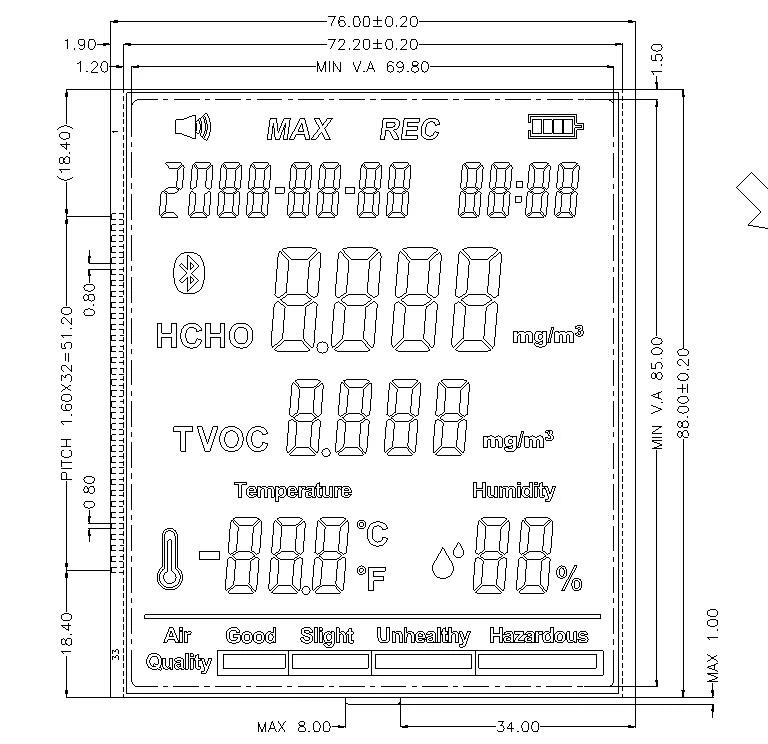
- Liquid Crystal Alignment: The alignment of the liquid crystal molecules in the display plays a crucial role in determining the viewing angle. In STN LCDs, the liquid crystals are twisted at a specific angle to control the polarization of light. Any deviation from the optimal alignment can result in a reduced viewing angle.
- Polarizer Quality: Polarizers are used in LCD displays to control the polarization of light. The quality of the polarizers can significantly affect the viewing angle. High-quality polarizers can provide a wider viewing angle and better image quality.
- Cell Gap: The cell gap, which is the distance between the two glass substrates in the LCD display, also affects the viewing angle. A smaller cell gap can result in a wider viewing angle, but it can also increase the risk of display defects.
- Backlight Design: The design of the backlight can also impact the viewing angle. A well-designed backlight can provide uniform illumination across the display, which can improve the viewing angle and image quality.
Types of Viewing Angles
There are two main types of viewing angles: horizontal and vertical.
- Horizontal Viewing Angle: This refers to the maximum angle from which a viewer can move left or right of the center of the display and still see the image clearly. A wider horizontal viewing angle is desirable for applications where the display may be viewed from different positions, such as in a public setting or in a multi-person environment.
- Vertical Viewing Angle: This refers to the maximum angle from which a viewer can move up or down from the center of the display and still see the image clearly. A wider vertical viewing angle is important for applications where the display may be tilted or viewed from different heights, such as in a mobile device or a vehicle dashboard.
Importance of Viewing Angle in Different Applications
The importance of the viewing angle varies depending on the application. Here are some examples:
- Industrial Equipment: In industrial settings, STN LCD displays are often used in control panels and monitoring systems. A wide viewing angle is essential in these applications to ensure that operators can easily view the display from different positions and angles.
- Medical Devices: Medical devices, such as patient monitors and diagnostic equipment, require high-quality displays with wide viewing angles. This is because medical professionals need to be able to view the display clearly from different positions and angles during procedures.
- Consumer Electronics: In consumer electronics, such as mobile phones, tablets, and smartwatches, a wide viewing angle is important for providing a better user experience. Consumers often view these devices from different angles, and a wide viewing angle ensures that the image remains clear and visible.
Our STN LCD Displays and Viewing Angles
As a supplier of STN LCD displays, we understand the importance of viewing angles in different applications. That's why we offer a wide range of STN LCD displays with excellent viewing angles. Our displays are designed using the latest technology and high-quality materials to ensure optimal performance and image quality.
One of our popular products is the Positive Transmmisive STN LCD Display. This display offers a wide viewing angle, high contrast ratio, and low power consumption, making it suitable for a variety of applications.
How to Choose the Right STN LCD Display Based on Viewing Angle
When choosing an STN LCD display, it's important to consider the viewing angle requirements of your application. Here are some tips to help you make the right choice:
- Determine the Application: First, determine the specific application for which you need the display. Consider factors such as the viewing environment, the number of viewers, and the viewing angles required.
- Check the Specs: Look for the viewing angle specifications provided by the display manufacturer. Pay attention to both the horizontal and vertical viewing angles.
- Test the Display: If possible, test the display in person to see how it looks from different angles. This can help you determine if the viewing angle is suitable for your application.
- Consider Other Factors: In addition to the viewing angle, consider other factors such as the display size, resolution, contrast ratio, and power consumption. These factors can also affect the overall performance and usability of the display.
Contact Us for Your STN LCD Display Needs
If you're looking for high-quality STN LCD displays with excellent viewing angles, look no further. As a leading supplier of STN LCD displays, we have the expertise and experience to provide you with the best possible products and solutions.
Whether you need a display for industrial equipment, medical devices, or consumer electronics, we can help. Our team of experts can work with you to understand your specific requirements and recommend the right display for your application.
Contact us today to discuss your STN LCD display needs and start the procurement process. We look forward to working with you!
References
- "Liquid Crystal Displays: Fundamentals and Applications" by Shin-Tson Wu and Daniel Goodenough
- "Handbook of Display Technology" edited by John A. Robertson


