

What is the color depth of an STN LCD display?
Leave a message

Color depth, also known as bit depth, is a crucial specification when it comes to understanding the visual capabilities of an STN (Super Twisted Nematic) LCD display. As a supplier of STN LCD displays, I've encountered numerous inquiries regarding this technical aspect. In this blog post, I'll delve into what color depth means for an STN LCD display, its significance, and how it impacts the overall user experience.
Understanding Color Depth
Color depth refers to the number of bits used to represent the color of each pixel on a display. Each bit can have two states, 0 or 1. Therefore, the more bits are used per pixel, the greater the number of distinct colors that can be displayed. For example, a 1-bit color depth can represent only two colors, typically black and white. This is the simplest form of color representation and is often used in monochrome displays.
In the context of STN LCD displays, color depth can vary depending on the specific application and requirements. STN LCDs are commonly used in devices where power efficiency and cost-effectiveness are priorities, such as calculators, digital watches, and simple industrial control panels. These applications often do not require a high color depth, and monochrome or low-color-depth displays are sufficient.
Common Color Depths in STN LCD Displays
1-Bit (Monochrome)
As mentioned earlier, a 1-bit color depth is the most basic form. It can display only two colors, usually black and white. Monochrome STN LCD displays are widely used in applications where simplicity and low power consumption are key. For instance, many calculators and basic digital thermometers use 1-bit STN LCDs. These displays are easy to manufacture and are very cost-effective. They also consume very little power, which is ideal for battery-powered devices.
2-Bit (4 Colors)
A 2-bit color depth allows for the display of four different colors. This can be used to add a bit more visual information compared to a 1-bit display. For example, in addition to black and white, it might be possible to display two shades of gray. Some simple industrial control panels or older mobile phone displays used 2-bit STN LCDs to provide a bit more visual differentiation.
Higher Color Depths
While less common in traditional STN LCD applications, it is possible to achieve higher color depths. For example, 4-bit (16 colors) or 8-bit (256 colors) STN LCDs can be used in applications where more color information is required. However, as the color depth increases, the power consumption and cost of the display also tend to increase. Additionally, STN LCDs may not be able to provide the same level of color accuracy and quality as more advanced display technologies, such as TFT (Thin-Film Transistor) LCDs, at higher color depths.
Significance of Color Depth in STN LCD Displays
The color depth of an STN LCD display has a significant impact on its usability and the type of applications it can be used for.

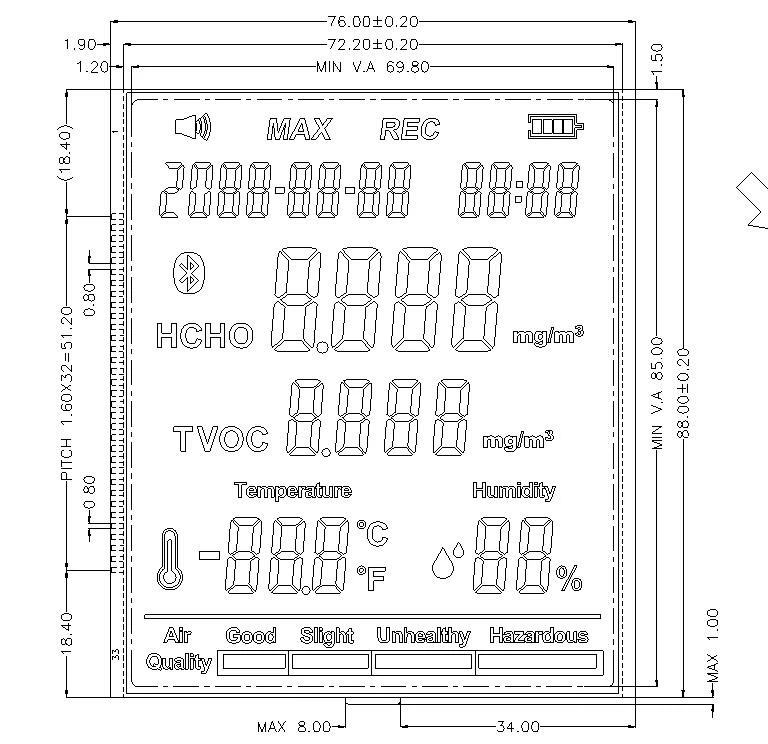
Visual Clarity
In applications where visual clarity is essential, such as displaying text or simple graphics, a higher color depth can improve readability. For example, a 2-bit display with different shades of gray can make text stand out more clearly compared to a 1-bit black-and-white display. This is particularly important in industrial control panels where operators need to quickly and accurately read information.
Application Suitability
The color depth also determines the suitability of an STN LCD display for different applications. Monochrome displays are ideal for simple devices where only basic information needs to be displayed. On the other hand, applications that require the display of more complex graphics or images may benefit from a higher color depth. However, it's important to note that STN LCDs may not be the best choice for applications that demand high-quality color reproduction, such as high-end smartphones or digital cameras.
Positive Transmmisive STN LCD Display
If you're looking for a specific type of STN LCD display, you might be interested in the Positive Transmmisive STN LCD Display. This type of display offers certain advantages, such as good visibility in various lighting conditions and relatively low power consumption. It can be used in a wide range of applications, from consumer electronics to industrial equipment.
Impact on Power Consumption and Cost
As mentioned earlier, color depth has a direct impact on power consumption and cost. Higher color depths generally require more complex circuitry and more power to drive the pixels. This can be a significant consideration, especially for battery-powered devices. Manufacturers need to balance the need for a higher color depth with the power consumption requirements of the device.
In terms of cost, higher color depth displays are typically more expensive to manufacture. This is due to the increased complexity of the manufacturing process and the need for more advanced components. Therefore, when selecting an STN LCD display, it's important to consider the specific requirements of the application and the budget available.
Considerations for Purchasing STN LCD Displays
When purchasing an STN LCD display, color depth is just one of the many factors to consider. Other important factors include viewing angle, contrast ratio, response time, and size.
Viewing Angle
STN LCD displays typically have a limited viewing angle compared to more advanced display technologies. This means that the image may appear distorted or washed out when viewed from an angle. It's important to consider the intended viewing angle of the display in the application.
Contrast Ratio
The contrast ratio refers to the difference between the brightest and darkest colors that the display can produce. A higher contrast ratio generally results in a more vivid and clear image. However, STN LCDs may not have the same high contrast ratios as TFT LCDs.
Response Time
Response time is the time it takes for a pixel to change from one color to another. A faster response time is important for applications that involve moving images, such as video playback. STN LCDs typically have slower response times compared to TFT LCDs.
Conclusion
In conclusion, color depth is an important aspect of an STN LCD display. It determines the number of colors that can be displayed and has a significant impact on the visual clarity, application suitability, power consumption, and cost of the display. As a supplier of STN LCD displays, I understand the importance of providing customers with the right information to make informed decisions.
If you're interested in purchasing STN LCD displays for your application, I encourage you to contact me for more information and to discuss your specific requirements. Whether you need a monochrome display for a simple device or a higher-color-depth display for a more complex application, I can help you find the right solution.
References
- Smith, J. (2020). Display Technology Handbook. New York: Wiley.
- Jones, A. (2018). LCD Displays: Principles and Applications. London: Elsevier.


