

What is the display cable capacitance of a 2.8 Inch TFT LCD Display?
Leave a message

What is the display cable capacitance of a 2.8 Inch TFT LCD Display?
As a supplier of 2.8 Inch TFT LCD Displays, I often encounter questions from customers about the technical specifications of our products, and one topic that frequently comes up is the display cable capacitance. In this blog, I will delve into what display cable capacitance is, its significance for a 2.8 Inch TFT LCD Display, and how it affects the overall performance of the display.
Understanding Display Cable Capacitance
Capacitance is a fundamental electrical property that describes the ability of a system to store an electrical charge. In the context of a display cable, it refers to the amount of electrical charge that the cable can store per unit voltage. The cable acts as a capacitor due to the close proximity of the conductors, which are typically insulated from each other. When an electrical signal is sent through the cable, the capacitance causes a delay in the signal propagation and can also lead to signal distortion.
The capacitance of a display cable is influenced by several factors, including the cable's length, the type of insulation used, the number of conductors, and their spacing. Longer cables generally have higher capacitance because there is more surface area for the charge to accumulate. Similarly, cables with a larger number of conductors or closer conductor spacing will also have higher capacitance due to increased electrostatic coupling between the conductors.

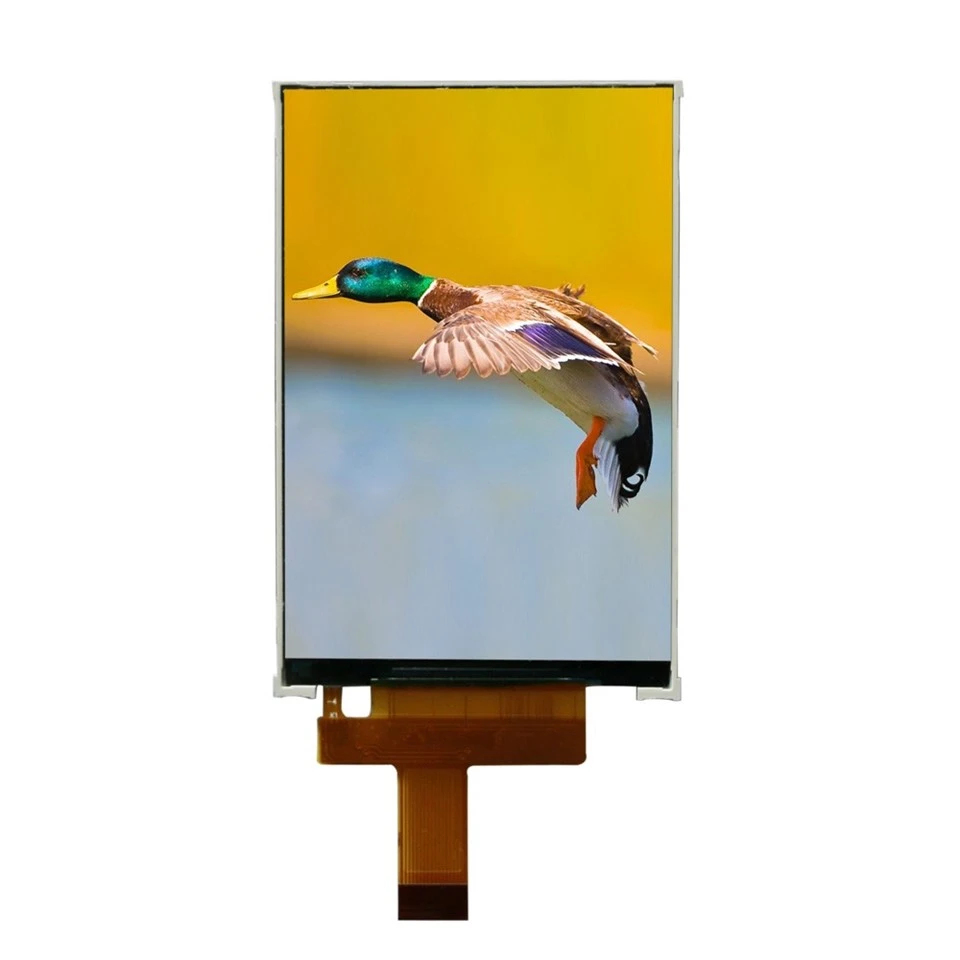
Importance of Display Cable Capacitance in a 2.8 Inch TFT LCD Display
For a 2.8 Inch TFT LCD Display, the display cable capacitance plays a crucial role in determining the quality of the image displayed on the screen. A high-capacitance cable can cause several issues, such as signal attenuation, crosstalk, and ringing, which can all degrade the image quality.
- Signal Attenuation: As the electrical signal travels through the cable, the capacitance causes the signal to lose some of its energy. This results in a weaker signal reaching the display, which can lead to a dimmer or less vibrant image. In extreme cases, the signal may be so weak that it cannot drive the display properly, resulting in a blank or distorted screen.
- Crosstalk: Crosstalk occurs when the electrical signal in one conductor interferes with the signal in an adjacent conductor. This is caused by the electrostatic coupling between the conductors, which is enhanced by the cable's capacitance. Crosstalk can manifest as ghosting or interference patterns on the screen, which can significantly reduce the clarity of the image.
- Ringing: Ringing is a phenomenon where the electrical signal oscillates or "rings" after the initial signal transition. This is caused by the capacitance and inductance of the cable, which create a resonant circuit. Ringing can cause overshoot and undershoot in the signal, which can lead to incorrect color reproduction and pixel errors on the screen.
Measuring and Controlling Display Cable Capacitance
To ensure the optimal performance of a 2.8 Inch TFT LCD Display, it is essential to measure and control the display cable capacitance. There are several methods for measuring cable capacitance, including using a capacitance meter or an oscilloscope. These tools can provide accurate measurements of the cable's capacitance, which can then be used to determine whether the cable is suitable for the display.
To control the display cable capacitance, several techniques can be employed. One common approach is to use a cable with a lower capacitance. This can be achieved by using a cable with a larger conductor spacing, a thicker insulation layer, or a lower dielectric constant material. Another technique is to use a shorter cable, as shorter cables generally have lower capacitance.
In addition to using a low-capacitance cable, other measures can be taken to reduce the impact of capacitance on the display. For example, using a proper termination technique at both ends of the cable can help to minimize signal reflections and ringing. This can be achieved by using a termination resistor that matches the characteristic impedance of the cable.
Display Cable Capacitance and Other TFT LCD Displays
While we are focusing on 2.8 Inch TFT LCD Displays, it's worth noting that the concept of display cable capacitance is relevant to other sizes of TFT LCD displays as well. For instance, a 3.5 Inch TFT LCD Display may have different requirements for cable capacitance due to its larger size and potentially higher resolution. A larger display may require a more robust signal, and thus, a cable with lower capacitance to ensure optimal image quality.
Similarly, a 3.4 Inch TFT LCD Display and a 2 Inch TFT LCD Display will also have their own unique considerations regarding cable capacitance. The smaller size of the 2 Inch TFT LCD Display may allow for more flexibility in cable selection, but it still requires careful attention to cable capacitance to avoid signal degradation.
Conclusion
In conclusion, the display cable capacitance of a 2.8 Inch TFT LCD Display is a critical factor that can significantly impact the image quality and performance of the display. By understanding the concept of capacitance, its effects on the display, and how to measure and control it, we can ensure that our customers receive the best possible product.
As a supplier of 2.8 Inch TFT LCD Displays, we are committed to providing high-quality products that meet the needs of our customers. We carefully select the display cables for our products to ensure that they have the appropriate capacitance and other electrical properties. If you are in the market for a 2.8 Inch TFT LCD Display or have any questions about display cable capacitance, we encourage you to contact us for more information. We look forward to discussing your requirements and helping you find the perfect solution for your application.
References
- Horowitz, P., & Hill, W. (1989). The Art of Electronics. Cambridge University Press.
- Baker, R. J. (2010). CMOS Circuit Design, Layout, and Simulation. Wiley-IEEE Press.


