

What is the power-on time of a 2.2 Inch TFT LCD Display?
Leave a message

As a supplier of 2.2 Inch TFT LCD Displays, I often receive inquiries about various technical aspects of our products. One question that frequently comes up is: What is the power - on time of a 2.2 Inch TFT LCD Display? In this blog post, I'll delve into this topic in detail, exploring the factors that affect power - on time and providing some insights based on our experience in the industry.
Understanding Power - On Time
Power - on time refers to the duration it takes for a TFT LCD display to become fully operational after power is applied. This includes the time required for the display to initialize its internal components, start up the backlight, and display the first image or information. It is an important parameter, especially in applications where quick response is crucial, such as in portable devices, industrial control panels, and automotive displays.
Factors Affecting Power - On Time
1. Display Controller
The display controller is the brain of the TFT LCD display. It is responsible for managing the communication between the display and the host device, as well as controlling the operation of the display's internal components. Different display controllers have different processing speeds and initialization procedures. High - end controllers with advanced features may take longer to initialize, but they can also provide better image quality and more functionality. For example, some controllers need to perform self - tests, load configuration data, and initialize the graphics processing unit (GPU) before the display can start showing images.
2. Backlight
The backlight is another key factor that affects power - on time. TFT LCD displays rely on a backlight to illuminate the liquid crystal layer and make the images visible. There are different types of backlights, such as cold cathode fluorescent lamps (CCFL) and light - emitting diodes (LED). LED backlights are more commonly used in modern displays due to their lower power consumption, longer lifespan, and faster response times. However, even with LED backlights, the time it takes to reach full brightness can vary. Some backlights need to warm up gradually to reach their optimal brightness, which can add to the overall power - on time.
3. System Configuration
The way the display is integrated into the overall system also plays a role in power - on time. If the display is connected to a complex system with multiple devices and interfaces, the system may need to perform additional tasks, such as device enumeration, driver loading, and communication protocol negotiation. For example, in a smart home control panel that uses a 2.2 Inch TFT LCD display, the system may need to connect to the Wi - Fi network, authenticate with the cloud server, and load the user interface before the display can show the relevant information.
4. Software and Firmware
The software and firmware running on the display and the host device can significantly impact power - on time. Optimized software can reduce the initialization time by streamlining the startup procedures and minimizing unnecessary operations. On the other hand, poorly written software or firmware can cause delays due to bugs, inefficient code, or excessive resource consumption. For example, if the display driver has a long - running initialization routine or if the operating system takes a long time to boot up, the power - on time of the display will be affected.
Typical Power - On Time for 2.2 Inch TFT LCD Displays
Based on our experience as a 2.2 Inch TFT LCD Display supplier, the power - on time for these displays typically ranges from a few hundred milliseconds to a few seconds. In general, displays with simple configurations and basic functionality tend to have shorter power - on times. For example, a 2.2 Inch TFT LCD display used in a simple handheld device with a basic display controller and an LED backlight may have a power - on time of around 300 - 500 milliseconds.
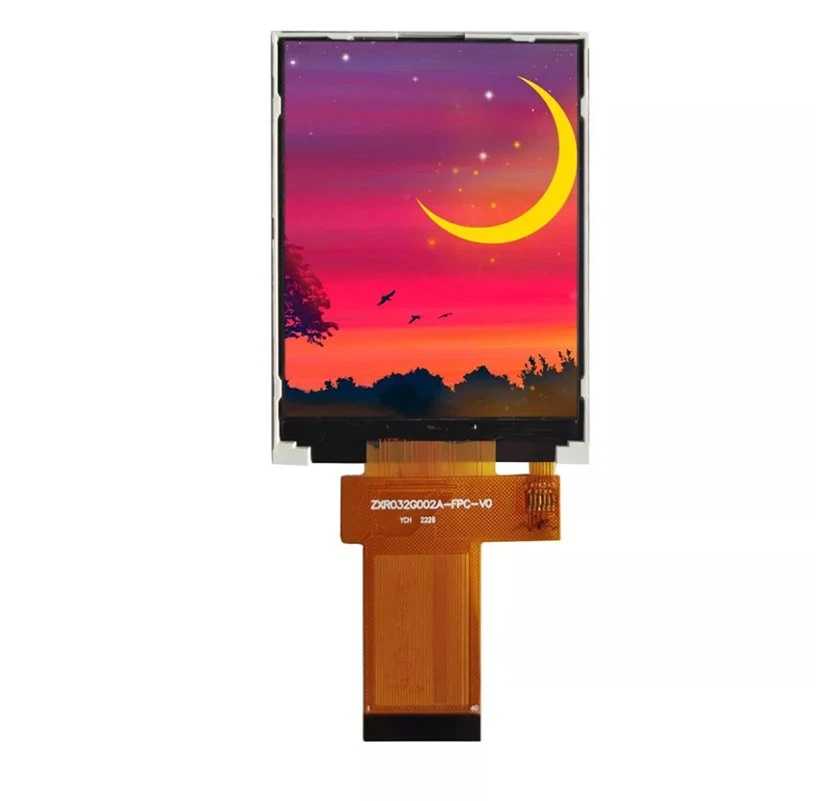

However, for displays with more advanced features, such as high - resolution graphics, touch - screen functionality, or wireless connectivity, the power - on time can be longer. These displays may require more time to initialize their internal components, load the necessary software, and establish communication with other devices. In some cases, the power - on time can be up to 2 - 3 seconds.
Comparison with Other Display Sizes
It's interesting to compare the power - on time of 2.2 Inch TFT LCD Displays with other display sizes. For instance, the 1.77 Inch TFT LCD Display generally has a shorter power - on time due to its smaller size and simpler internal structure. The smaller display requires less power to operate and has fewer components to initialize, resulting in a quicker startup.
On the other hand, larger displays like the 3.2 Inch TFT LCD Display and 2.4 Inch TFT LCD Display may have longer power - on times. Larger displays often have higher resolutions and more advanced features, which means they need more time to initialize their display controllers, backlights, and other components. Additionally, the larger backlight in these displays may take longer to reach full brightness.
Importance of Power - On Time in Different Applications
1. Portable Devices
In portable devices such as smartphones, tablets, and smartwatches, quick power - on time is essential. Users expect these devices to start up and display information immediately when they press the power button. A long power - on time can be frustrating for users and may even lead to a poor user experience. For example, in a smartwatch with a 2.2 Inch TFT LCD display, a long power - on time can delay the display of important notifications, such as incoming calls or messages.
2. Industrial Control Panels
Industrial control panels require reliable and fast - responding displays. In industrial environments, time is often of the essence, and operators need to access information quickly to make decisions. A 2.2 Inch TFT LCD display used in an industrial control panel should have a short power - on time to ensure that the operators can view the control status and process data without delay.
3. Automotive Displays
Automotive displays need to be ready to use as soon as the vehicle is started. A long power - on time can be a safety hazard, as it may prevent the driver from accessing important information, such as speed, fuel level, or warning messages. A 2.2 Inch TFT LCD display used in a car dashboard or a rear - view camera system should have a short power - on time to ensure the safety and convenience of the driver.
How We Optimize Power - On Time
As a 2.2 Inch TFT LCD Display supplier, we are committed to providing high - quality displays with short power - on times. We use advanced display controllers with optimized initialization procedures to reduce the startup time. Our engineers also work closely with our customers to optimize the system configuration and software settings to ensure that the display can start up quickly and efficiently.
In addition, we use high - quality LED backlights that can reach full brightness quickly. We have also developed advanced power management techniques to reduce the power consumption during the startup process, which helps to further shorten the power - on time.
Conclusion
The power - on time of a 2.2 Inch TFT LCD Display is influenced by various factors, including the display controller, backlight, system configuration, and software. While the typical power - on time ranges from a few hundred milliseconds to a few seconds, it can vary depending on the specific features and applications of the display.
If you are in the market for a 2.2 Inch TFT LCD Display or have any questions about power - on time or other technical aspects of our products, please feel free to contact us. We are here to provide you with the best solutions and support for your display needs.
References
- "TFT LCD Display Technology Handbook"
- Industry reports on display technology and applications.


